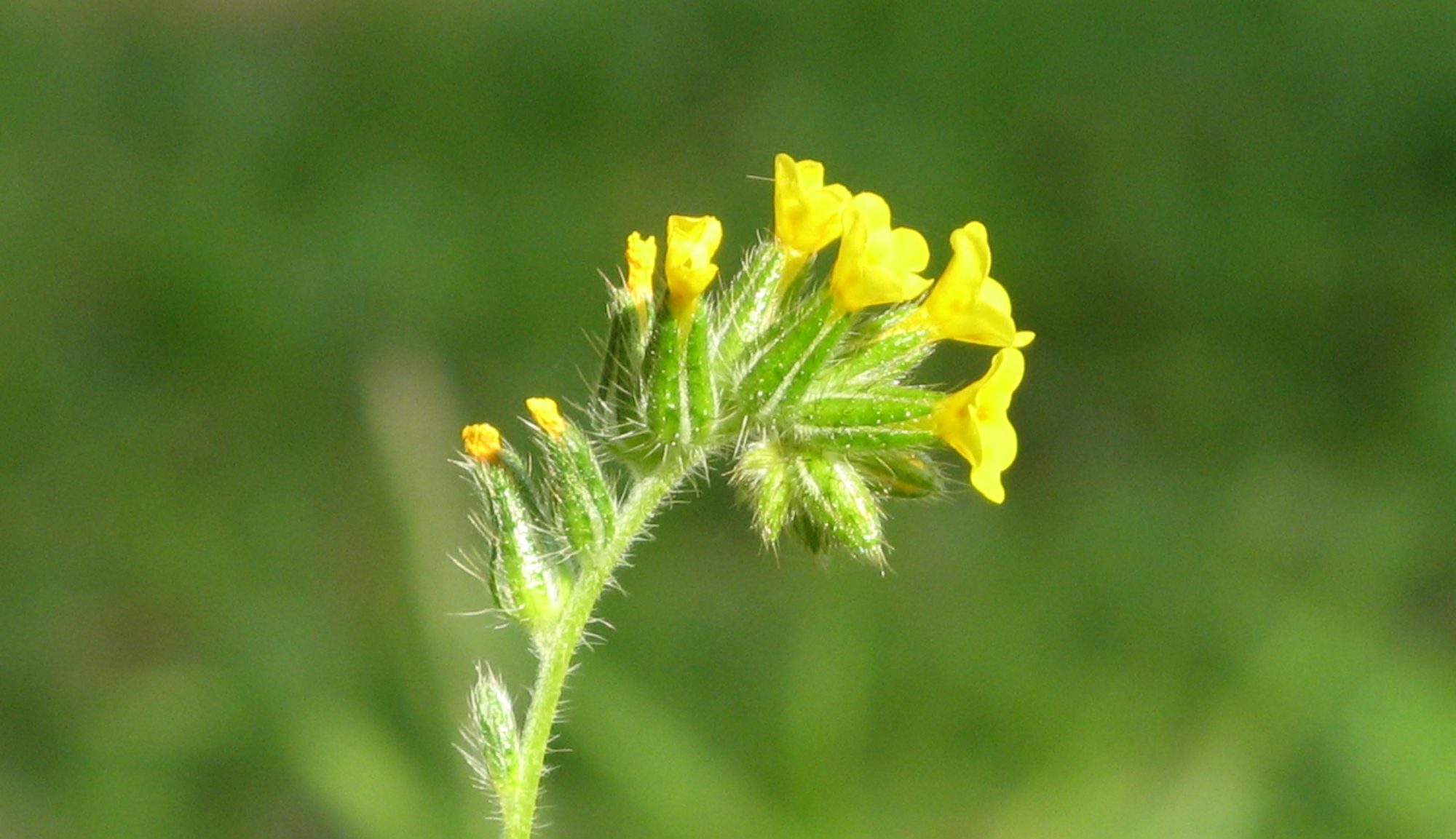
It’s rainy season where I live. The first rains bring up carpets of green in the fields, and they make me feel contented. After a bit, though, some of the fields start turning yellow. In Russian, the word yellow has the connotation of sadness.
Those green carpets are volunteer plants. Farmers see problems when they see uninvited plants in their field, but I see atmosphere scrubbers and soil feeders. Without any intervention, the ecosystem removes carbon from the atmosphere, pumping it into the soil. Roots open up the soil and lay down organic matter, giving life to bacteria, fungi, worms, and more. Mycorrhizal fungi, the kind that trade carbon from the plant for phosphate and other nutrients they pick up from their hiding places in the soil, can only live when attached to a living root. If there is such a thing as intrinsic value, the soil food web has it. It’s also beneficial for crops and humans, if we know how to treat it.
The yellowed fields have been dosed with herbicide. Carbon capture stops. The unprotected soil compacts under the pelting raindrops. Those strains of mycorrhizal fungi that are the most cooperative in exchanging phosphate die off, while the more selfish strains that invest in spore production, instead of helping the plant, persist. The nitrate that would feed the plants percolates down toward the water table or converts to the potent greenhouse gas nitrous oxide. I look away.
What I’d really like to see is lush cover crop carpeting all the bare soil. Besides doing the atmosphere-scrubbing, soil-feeding job that any plant would do, some cover crop species turn nitrogen gas into biologically available nitrogen, and some produce compounds that actually inhibit the germination of unwelcome plants. The trick is having a termination plan. Mowing followed by residue incorporation is standard, but that negates some of the benefits of having plants there. Some research is being done on crimping cover crops, breaking the stems to end their growth, but this method is not suitable for some species, particularly grasses. Unfortunately, a standard practice for cover crop termination is again herbicide.
Herbicides are the most widely used class of pesticide by volume. Glyphosate, the active ingredient in Roundup, was a revolution in vegetation management. Its maker, Monsanto, touted it as non-toxic with no risk of weeds developing resistance. Monsanto engineered a bacterial gene for glyphosate resistance into soybeans and turned its product into the conventional farmers’ fantasy made reality, a weed-free field. Further glyphosate-resistant crops followed, and Roundup became as crucial to conventional agriculture as fertilizer.
On the margins of the ag world there were warnings. The vast areas planted to corn and soy across the US had been prairie before, and some native plants had been able to escape other weed control measures here and there. With glyphosate sprayed on a continent-wide basis, fields provided no refuges for native plants, notably milkweed. Native milkweed is the only host for monarch butterfly caterpillars, and the monarch population plummeted. Well-meaning gardeners planted milkweed in their gardens, but monarch ecologists point out that caterpillars in diverse gardens are subject to the same natural enemies that attack the garden pests. Monarch caterpillars thrive on that lone milkweed in the monocrop cornfield where natural enemies leave them alone.
In spite of the claims that the pathway in plants that glyphosate targets is so essential that weeds would not develop resistance, weed agroecologists noted that resistance to earlier-generation herbicides had been evolving in weeds at a fast rate. Indeed, with 50 weed species now resistant to glyphosate, seed companies have been compelled to turn to more toxic alternatives to engineer into their crops, such as dicamba.
With new varieties resistant to multiple herbicides, the process starts over, but there is a twist. One of the most intractable weeds in the corn belt is triple-herbicide-resistant volunteer corn sprouting from the occasional stray ear that falls on the ground at harvest. The corn that sprouts there is hybrid, so the offspring lack the desirable seed traits of the parent. The multiple seeds falling in one place produce a thicket of corn plants that interferes with the movement of machinery. And none of the herbicides that the parent was resistant to can kill the offspring!
A previously unforeseen effect of pervasive glyphosate use came to light a few years ago. Glyphosate kills by blocking the shikimic acid pathway, needed to make the essential amino acids tyrosine, tryptophan, and phenylalanine. Without these amino acids, plants cannot produce proteins, molecules that include the enzymes that keep the plant functioning. Humans don’t have this pathway, but It turns out that bacteria do, and these are reliably killed off in large numbers when exposed to glyphosate. Dr. Rupah Marya of UC San Francisco, studying diseases related to inflammation such as diabetes, arthritis, Alzheimer’s, and cancer, had an Aha moment when she found that irritable bowel syndrome was found more often in people who lived near farm fields. Beyond the disruption of the healthy microbiome that helps keep pathogens in check, glyphosate spares the pathogenic bacterium C. diff., in effect amplifying its representation in the bacterial community in soil, which gets airborne as dust from the fields. In hindsight, it makes sense that bacteria with the simplified genetic makeup characteristic of specialized pathogens would lack the shikimic acid pathway and thus would be immune to glyphosate. Not only is the protective effect of the full microbiome gone, but the portion that remains is more harmful.
And that’s what I see in a yellowed field.
Hello incognito. I really like the way you tell the story of what could be a very complex pathway of herbicide resistance in a way that is meaningful and impactful. Your followup blog should tell the same story, but about cases where alternatives to herbicides actually work.