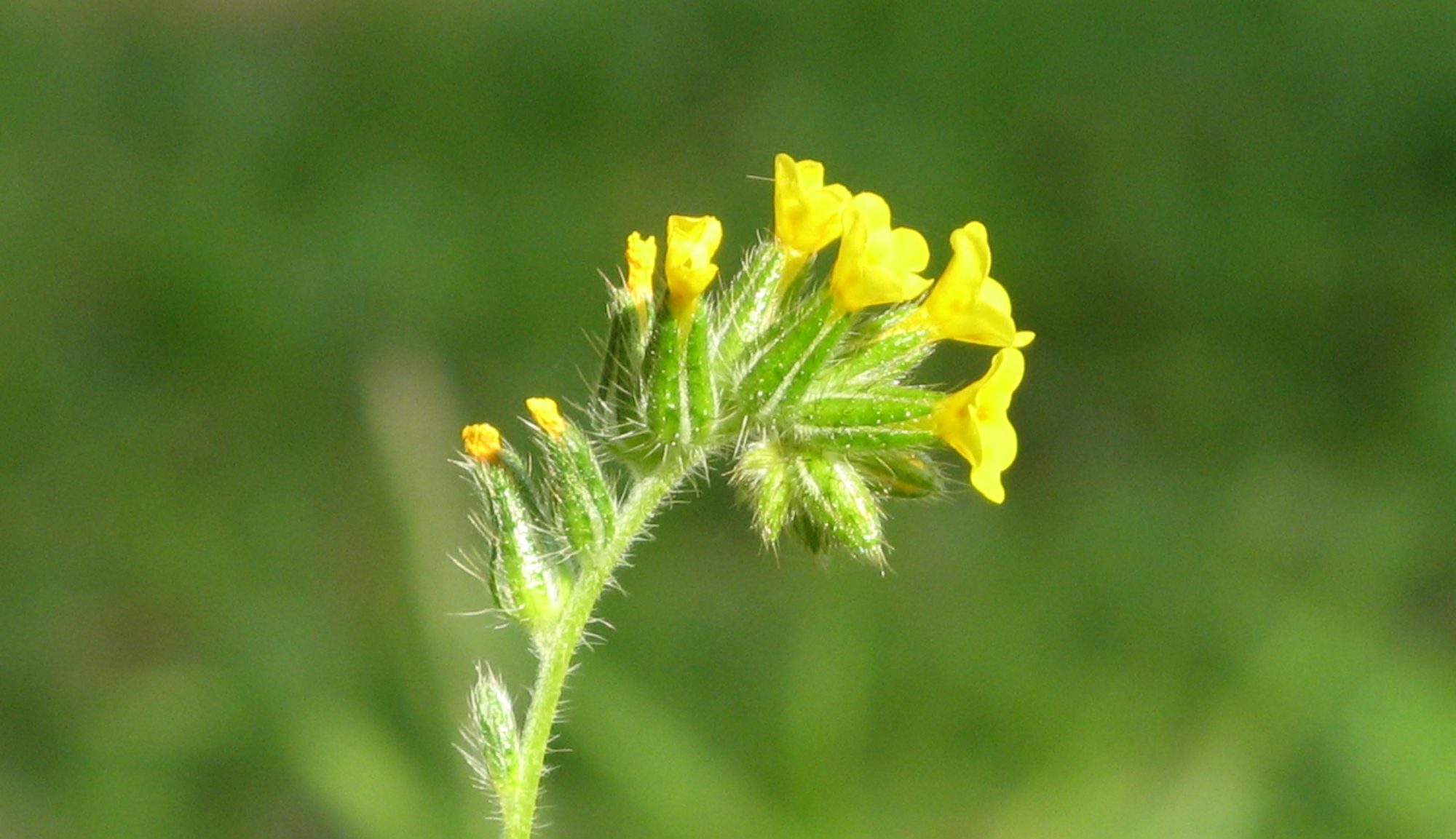
What is a weed? The easy definition is a plant out of place, but hidden in that definition is an entire plant lifestyle. After all, you don’t find yourself hoeing roses and redwoods out of your lettuce patch. Some plants just do not fit the description of “weedy”.
The key is disturbance. A mature forest or grassland is not beset by pigweed, crabgrass, or annual bluegrass. The existing vegetation is strongly competitive, maybe even allelopathic, and quick-growing annuals fail at the seedling stage if they are foolish enough to germinate. But if there is a disturbance that removes vegetation, there appears an ecological vacuum, and Nature abhors a vacuum.
One of the most dramatic disturbances in living memory was the explosion of Mount St. Helens in southern Washington state. In 1980 the north face of this volcano, along with 800 feet from its peak, slid into the valley below. The suddenly exposed magma chamber exploded with a barrage of boulders. The surrounding forest was either flattened or buried. The area around the mountain looked like a moonscape.
Ecologist Peter Kareiva arrived on the scene to document what happened next. The first seeds to arrive were of the appropriately named fireweed, a plant in the genus Epilobium, sister to the weed known as panicled willow-herb when it sprouts on a farm. The seeds of plants in this genus are lighter than dandelion seeds, and the fast-growing plants are adept at snatching up nutrients from cleared sites. Kareiva observed that each fireweed plant was an island of life amid the desolation. Aphids, also drifting on air currents, had landed on fireweed plants, and ladybugs and ants followed. Naturally the fireweed roots were hard at work depositing organic matter and enabling microbes that happened to be carried in on the wind to survive and multiply. With the ground being prepared for plants with higher soil resource requirements, the restoration of the ecosystem was under way.
A less dramatic but far larger disturbance takes place across inhabited continents on a regular basis – plowing on farms. With the vegetation gone, the soil is prone to washing or blowing away. Soluble nutrients can wash out of the soil, and microbial life has to survive by eating up the existing organic matter or going dormant. Into this vacuum come the weeds, ready to do their job. The seeds are already there from the seed rain and from dormant seeds deposited years earlier. Perennials with their rhizomes and bulblets buried deep in the soil start strong while the tiny annual seedlings catch up. Without any help from humans, the ecosystem begins to restore itself.
The story of how all those seeds get there is somewhat involved. Everyone knows that some seeds have structures to ride to new sites on the wind. Other means of transportation include hitching a ride in animal fur, surviving in the gut of animals and getting deposited in a plop of natural fertilizer, or even being flung yards away by a spring-loaded fruiting structure. To these pre-agricultural mechanisms add an agriculture-specific one – moving around with soil, whether it be in pots of transplants or stuck on tires and farm implements. Most annual weed seeds are tiny, on the scale of poppy seeds. Any little spot of mud could be the vehicle for a weed to relocate to a new site.
There is a reason weed seeds are small. Finding a suitable spot is hit-or-miss. If a weed spent all its resources producing large seeds, it would be limited to a smaller quantity, the chance of them all failing would be unacceptably high. The lineage would go extinct sooner or later. However, if a weed produces 100,000 tiny seeds, even if 99.9% of them fail to survive, that’s 100 that are available for a future generation.
I almost wrote “the next season” instead of “a future generation”, but that would be wrong. Weeds have another strategy for making sure they have future generations, and that is a state of variable dormancy. There is always a chance that next season there will be no disturbance, no opportunity for tiny seedlings to survive, or that the disturbance will happen after germination, killing them all. If all the seeds germinate that season? Extinction. But if a portion of the seeds are programmed to stay dormant and germinate two seasons later, those seeds will escape the bad season.
Now you’re probably thinking, what if there are two bad seasons in a row? And you’ve probably already figured out that there is another cohort of seeds that will stay dormant for both of those seasons. And maybe you’ve also figured out what annual weeds figured out long ago through trial and error – the species that are not extinct are the ones that produce seeds that are mostly dormant. Every year a small percentage of the seeds produced by a single plant will be ready to germinate, while the majority will remain in an enforced state of dormancy.
And this dormancy can be taken to extremes. In World War I, Flanders Field saw intense bombing. The following spring, as if in mourning for the dead men, the field was carpeted with red poppies that had not grown there in living memory. The seeds had been dormant for a very long time and were activated by the explosions.
Which brings up another trick that weed seeds have for tracking favorable environments – they can detect disturbance. If tiny seeds germinate deep in the soil, they are too frail to reach the light at the surface before using up their tiny packet of energy. They have to get their little solar collectors into the light before they can move beyond the size of a snippet of thread. The cold darkness of deep soil maintains them in a dormant state, while the fluctuating temperatures and light within the thin layer of soil at the surface signal them to break dormancy. Also, the wearing down of the seed coat can accelerate the emergence from dormancy. A bombing campaign accomplishes both the exposure of the seeds and the disruption of the seed coat. As does plowing.
Weed scientists Charles Mohler, John Teasdale, and Antonio DiTommaso, in their 2021 book, called simply Manage Weeds On Your Farm, have noted the common traits of weeds, along with those of individual weed species, and performed agroecological jiu jitsu on them, turning their strengths against them. And although weeds are the heroes of this blog post, I concede that even a hero can go crazy and become oppressive. When the weeds are not needed in a field, they are welcome to go to a different area and restore the soil there.
The first thing to remember in encouraging weeds to leave your plot alone is that seeing bare soil in the ecosystem is like seeing blood. Humans carry around quarts of blood inside us, and it performs important functions, but when it becomes visible on the outside, that’s cause for alarm – the body is compromised and susceptible to potential breakdown of integrity; the systems for recovery are signaled to activate. When bare soil comes into view, Nature’s system of recovery – weeds – gets activated. If you can substitute your own steps for recovery, one that is more in line with your goals for the land, the default system will be disfavored and possibly greatly attenuated.
Plants are key for ecosystem recovery, so crop plants can serve as an important component of the overall plan. Annual crops, however, share a preference for disturbance with weeds, meaning that without other measures, weeds and crops will grow together. One way to avoid ripping open the soil’s cover to grow annuals is to underseed them in a maturing crop. Another way is to plant into mulch, but in order for a mulch to be effective at discouraging weeds it has to be very thick. Large-seeded crop plants would have an advantage sprouting up through a thick mulch, but small-seeded crops would do better if transplanted into thick mulch as starts. Some mulches will release allelochemicals into the soil that inhibit small-seeded plants, so the recommendation for planting large seeds or starts also applies.
More plants means faster recovery, so another strategy is to plant densely and then thin when the seedlings get bigger. A greater variety of plants is even better for recovery, so an intercrop is potentially better, with species having complementary traits such as differential shade tolerance or development time allowing for greater contributions to soil health while also giving adequate yield from each species. A living mulch would also fill the spaces between crop plants with additional plants. I am reminded of the farmer with a plot cleared from the eastern forest of Nicaragua who grew his corn in a patch of sweet potato. The tangle of sweet potato vines lowered the corn yield, but all the other farmers had their plots overrun with cogon grass and ended up with nothing. Perhaps in other situations a more docile living mulch such as subterranean clover or native clump grasses would allow the corn to better thrive.
If there will be a gap between the harvest of one crop and the planting of another, a species-rich cover crop will do wonders to heal the wounded soil. Over the long term, the ecosystem’s routine for completing the healing process is to undergo succession, where the fireweed or other pioneer species (weeds) give way to perennials, shrubs, and maybe trees. A farmer can create a succession analog, planting a perennial pasture, an orchard, or variations of these. Ecologist John Ewel and his team did a radical succession mimic in Costa Rica. In matched plots, the existing rainforest was cut and burned. One plot was left to recover naturally. Another plot was maintained bare. In the succession mimic plot, the team replaced every herb, shrub, tree, and vine with a similar plant, the only stipulation being that the replacements be plants that would ordinarily not be able to get to that site. By the end of the experiment, the bare plot had experienced severe degradation, such that the job of removing plants became quite easy – not much would grow there. The succession mimic had maintained soil health and nutrient cycling comparable to the naturally recovered plot.
There are ways to use weeds’ dormancy characteristics favor crop plants. Weeds locked in dormancy will not grow in a crop, and weeds that come out of dormancy at an inopportune time will die. The way to keep them locked in dormancy is through no-till agriculture, leaving the soil mostly undisturbed during planting. On the other hand, the seed rain will deposit additional seeds on the surface, so no-till will present its own weed issues. The most inopportune time to come out of dormancy would be right before another disturbance. Farmer emeritus Jim Leap has long used this insight to devastating effect for weed management by preparing the beds, watering without planting the crop, and then smacking any weeds that come up using an implement that cuts the roots without turning the soil. Flaming would also work, and researchers have developed a weed electrocution machine. Once the cohort of weed seeds that have broken dormancy is eliminated, Leap plants the crop with minimal additional disturbance, and the later flushes of weeds are diminished, more often than not. Mohler, Teasdale, and DiTommaso have a name for this technique: the stale seedbed.
Weeds’ signature feature of snatching up available resources quickly can be turned into a liability by more effectively directing those resources toward the crop. The practices of planting densely or transplanting starts will close the canopy earlier, directing light preferentially to the crop. Regarding water, drip irrigation, particularly with buried drip tape, will keep most of the germinable seeds from accessing the water. By contrast, if you water the field as if it were a lawn, it will become a lawn – of weeds. Regarding nutrients, Mohler et al. present an aspect of nitrogen uptake by weeds that can be manipulated in order to direct the nitrogen to the crop. If there is plenty of nitrogen available, a crop plant will take up extra, but only up to a point, whereas a weed recognizes no limits on how much nitrogen to take up, snatching it up it as if the spigot will be turned off tomorrow. If you give the field a big slug of chemical fertilizer, the weeds are poised to take advantage of it. You can favor the crop by timing the availability of nitrogen to meet its development needs, such as applying slow-release organic fertilizer or trickling nitrogen into the irrigation water during later crop development stages.
Another important weed trait that can be manipulated to favor crop plants is the seed rain. This is actually a metaphor, as seeds can arrive at a site by various means, not just falling from the sky. Remember soil movement? If you carefully clean farm implements and boots and carefully screen purchased inputs like compost, manure, and seedling starts, you can cut the arrival of new weed seeds, including some potential headaches that you’ve been lucky not to have up to this point. If you place intentional plants, such as native or insectary plants, on field margins, rather than leaving nature to attempt to rehabilitate these areas with weeds, you reduce the seed rain. If you see a weed that has escaped other measures and is gearing up to dump 100,000 seeds, don’t be too proud to trek out and remove it – a practice known as rogueing – because that will save you time and energy in the long run. Mohler et al. have another trick, and that is to know what weeds you already have on your farm. Don’t be like the farmer who noticed that she suddenly had a johnsongrass problem where none had existed before. She blames it on sheep that had been brought in, ironically, to control weeds. If she had noticed an aggressive unfamiliar grass sprouting after the sheep’s removal, she might not now be dealing with johnsongrass’s steel cable rhizomes. Of course, to know your own weeds, you have to take an interest in them as individual species. It helps if you can see them as the ecosystem’s rescue crew rather than a the mob of thieves that conventional agriculture makes them out to be.
Mohler, Teasdale, and DiTommaso wrote a whole book on weed management, and I am not going to pack all that scholarship into a mere blog post. If you want to know more, you’ll have to get the book. Their basic message is that non-chemical weed management is like many tiny hammers that can add up to a big effect. My basic message is that weeds are good for something in the bigger scheme of things. They pre-date farming, and they will be around when farming ends, so in between they deserve respect. Thank them and let them know that their services are not required at this time, and mean it.